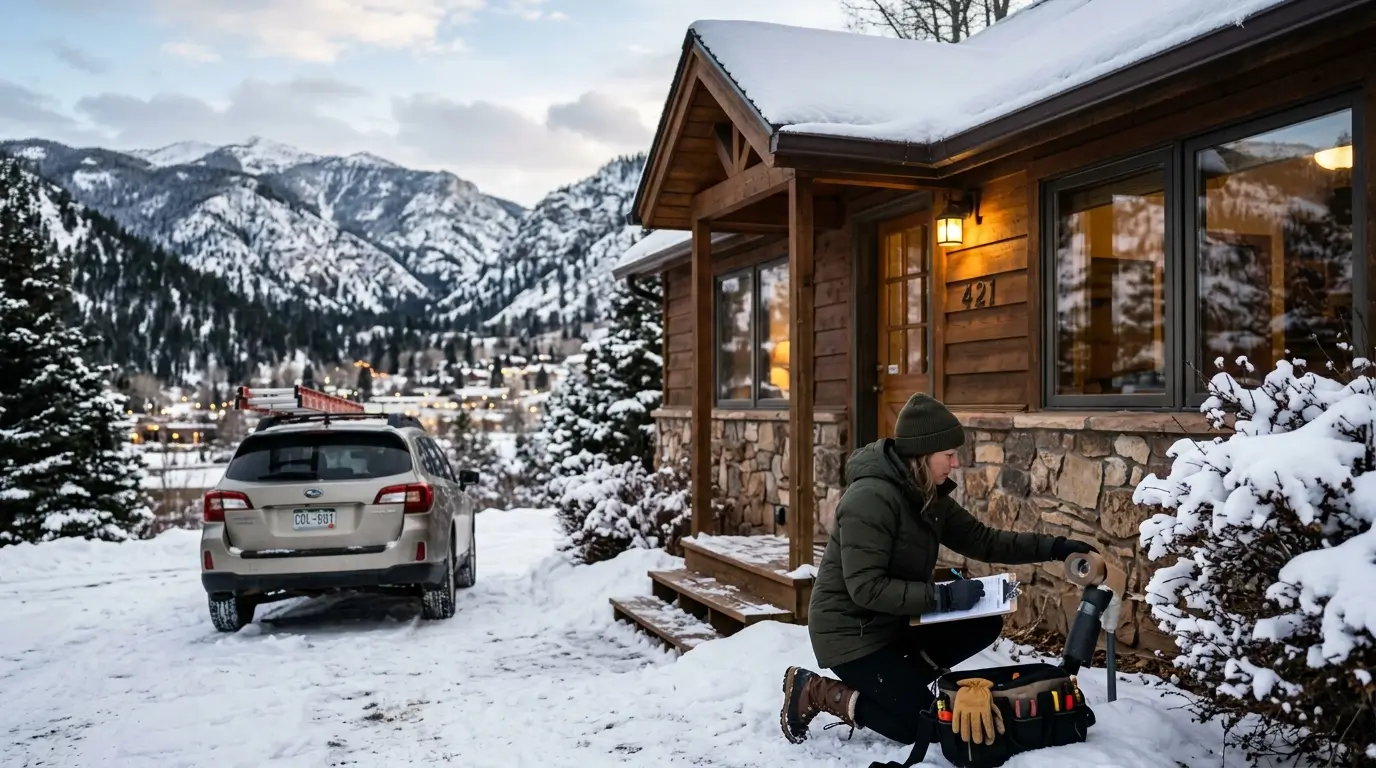
Glenwood Springs sits at nearly 5,800 feet in the Colorado River Valley, and winter here isn't the mild inconvenience it is in a lot of other rental markets. Heavy snow, sustained sub-freezing temperatures, and the kind of storms that roll through the Roaring Fork Valley all season put real pressure on a property, and a landlord who waits until the first hard freeze to think about it is already behind.
Key Takeaways
Preventing frozen pipes starts weeks before the first hard freeze, not after a tenant reports no water.
Roof snow load and ice dams are a genuine structural concern in this climate, not just a cosmetic issue.
Snow removal responsibility should be spelled out clearly in the lease well before the first storm, not negotiated after one has already hit.
Heating systems and any wood-burning appliances need a professional inspection before the season starts, not after a tenant reports a problem.
Basic exterior weatherproofing, closing off hose bibs and sealing obvious drafts, is inexpensive insurance against a much larger winter repair.
Preventing Frozen Pipes Before the First Hard Freeze
Frozen and burst pipes are one of the most common and most expensive winter problems a Glenwood Springs rental can face, and prevention has to happen before the cold actually arrives, not once temperatures have already dropped. Exterior hose bibs should be shut off and drained, any exposed pipes in crawl spaces or unheated areas need insulation, and it's worth confirming that heat tape is functioning on any pipe runs that have needed it in past winters. For a vacant property between tenants, leaving the heat set to a minimum safe temperature rather than turning it off entirely is one of the simplest ways to avoid a very expensive plumbing failure over a slow winter turnover period.
Roof Snow Load and Ice Dams
Heavy, wet snow accumulation is a genuine structural concern in this climate, not just an aesthetic one. Confirming a roof is in good condition before the first major snowfall, checking for any existing damage, loose flashing, or deteriorated shingles, catches small problems before they become bigger ones once real snow load is sitting on top of them. Ice dams, which form when heat escaping from the attic melts snow that then refreezes at the roof's edge, can force water backward under shingles and into the structure itself. Proper attic insulation and ventilation reduce this risk significantly, and it's worth having a property's attic checked if ice dams have been a recurring issue in past winters.
Clarifying Snow Removal Responsibility With Tenants
This is one of the most common sources of friction between landlords and tenants once winter actually arrives, and it's entirely avoidable with clear lease language set well before the first storm. Some leases assign driveway and walkway snow removal to the tenant, others keep it with the landlord or a hired snow removal service, and either approach can work as long as it's actually written down and both sides understand it before snow is on the ground. Ambiguity here doesn't just create tenant frustration, it can create real liability if an unaddressed icy walkway leads to an injury. Our maintenance team coordinates snow removal directly for a number of the properties we manage specifically to take this responsibility off both the owner and the tenant.
Heating System and Chimney Inspections
A furnace or heat pump that hasn't been serviced since last spring is exactly the kind of system that fails at the worst possible moment, typically during the first real cold snap when demand on it is highest. Scheduling a professional inspection before the season starts, rather than waiting for a tenant's no-heat call, catches a failing component while there's still time to repair it on a normal timeline rather than paying emergency service rates in the middle of a storm. Any property with a wood-burning stove or fireplace needs its chimney inspected and cleaned annually as well, since creosote buildup is a real fire risk that becomes more relevant the more a fireplace gets used during a cold Glenwood Springs winter. Furnace filters should also be changed right before the season starts, a simple step that's easy to overlook but makes a real difference in both efficiency and how hard the system has to work through a long winter.
Weatherproofing the Exterior
A handful of low-cost exterior checks make a meaningful difference once winter settles in. Confirming exterior door and window seals are intact, checking that any irrigation or sprinkler systems have been properly blown out and winterized, and making sure gutters are clear before the first snow all reduce the odds of a small, cheap problem turning into a bigger one once the ground freezes. Deck and railing conditions are also worth a quick check, since freeze-thaw cycles over a Glenwood Springs winter can widen small cracks in wood or concrete that were barely noticeable in the fall.
FAQ
How early should I start winterizing a Glenwood Springs rental?
Ideally by mid-to-late fall, well before overnight temperatures start dropping below freezing consistently, since several key steps like heat tape checks and heating system inspections need time to schedule before demand for HVAC service spikes.
Who should be responsible for snow removal, the landlord or the tenant?
Either arrangement can work, but it needs to be spelled out clearly in the lease before winter arrives rather than assumed or negotiated after the first storm.
Is it necessary to inspect a chimney every year if it wasn't used much last winter?
Yes. Creosote buildup and structural issues can develop even with light use, and an annual inspection is a relatively small cost compared to the fire risk of skipping it.
Should I leave the heat on in a vacant rental over the winter?
Yes, at a minimum safe temperature. Turning the heat off entirely in a vacant unit significantly increases the risk of frozen and burst pipes during a Glenwood Springs winter.
Getting Ahead of the Season Instead of Reacting to It
Winter in Glenwood Springs rewards landlords who prepare early and penalizes those who wait for a tenant complaint to find out something's wrong. Frozen pipes, roof damage, and heating failures are almost always cheaper to prevent than to repair once the season is already underway.
Our team can walk through a pre-winter inspection for any property in your portfolio, so reach out through our property management page if you'd like to get a property checked before the first real cold snap hits.