
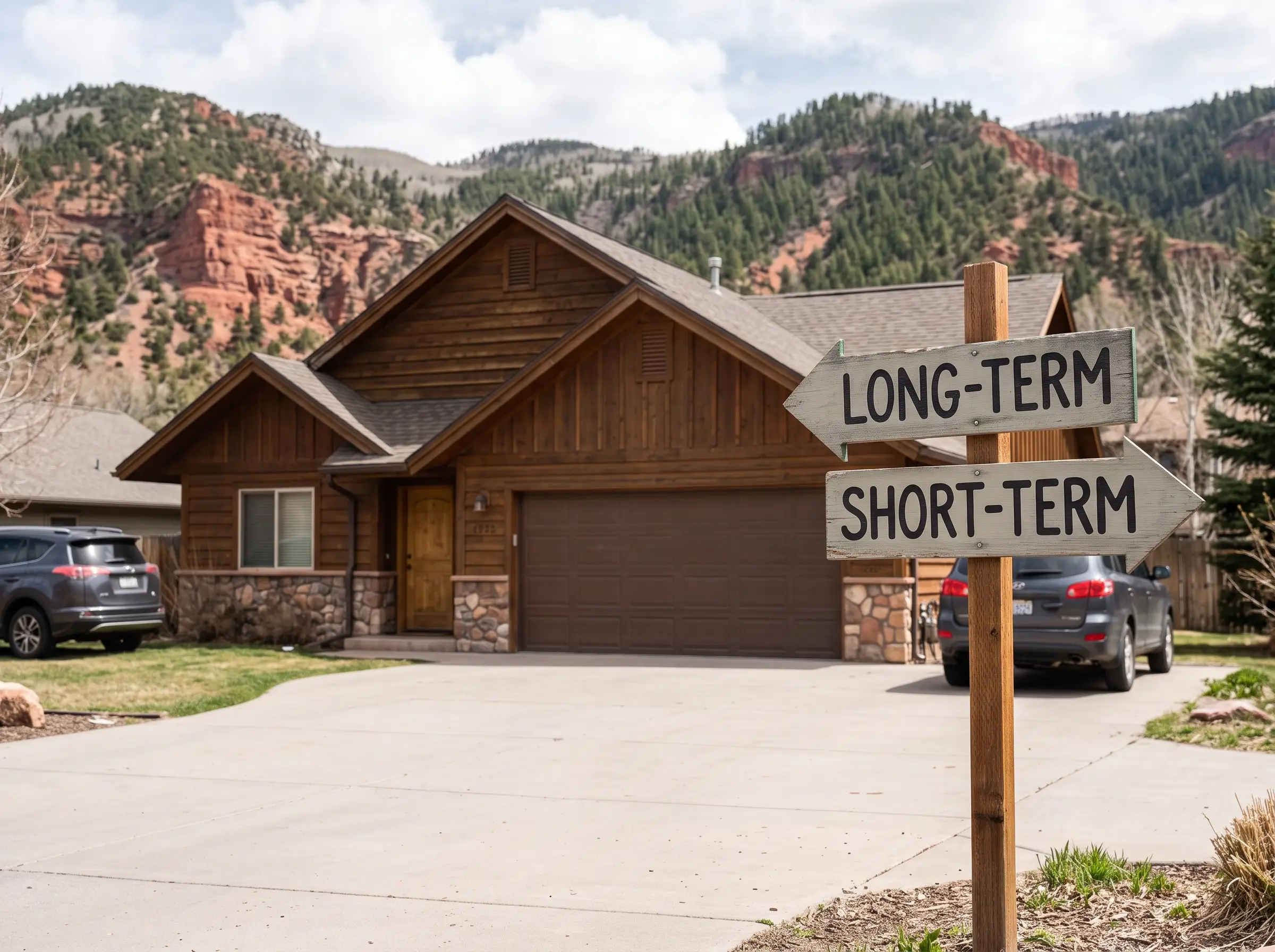
Hot springs, mountain views, and a steady stream of visitors make Glenwood Springs look like a vacation rental goldmine. Plenty of owners list their homes on Airbnb expecting a windfall. Some get it. Others quietly wish they had signed a lease instead.
The truth is that both paths can pay off. The difference lies in what happens after the bookings or rent checks come in. Costs, seasons, and city permits all shape what you actually keep.
So, long term vs short term rentals in Glenwood Springs: which earns more? Let’s dig into the real numbers.
Key Takeaways
- Gross income from long term and short term rentals in Glenwood Springs lands within a few thousand dollars.
- Short term rentals carry higher costs, including full-service management fees of 20% to 30%.
- Strict permit caps and a 250-foot buffer make STR eligibility the first thing to verify.
- Long term leasing delivers steadier net income for most single-family homes.
What Long Term Rentals Earn in Glenwood Springs
Long term rentals give property owners predictable rental income in one of Colorado’s priciest rental markets. Here are the numbers owners can expect.
Glenwood Springs Rents Run Well Above the National Average
Renters here pay a premium to live near the mountains. According to the U.S. Census Bureau, the median gross rent in Glenwood Springs was $1,717 for 2019 to 2023. The national median sat at $1,348. That puts local rents about 27% higher.
Glenwood Springs even outpaces much larger cities. Census data shows Colorado Springs with a median gross rent of $1,562. A town of roughly 10,000 people out-earns a major metro on rent.
Nearly Half of Local Households Rent Their Homes
Owners in Glenwood Springs have a deep pool of potential tenants. Only 52.5% of housing units are owner-occupied, so close to half of households rent. That steady rental demand keeps good homes from sitting vacant.
Local renters also tend to earn solid incomes. The city’s median household income reached $87,000. A strong local economy means more qualified applicants for your listing.
Year-Round Tenants Keep Operating Costs Low
A long term lease trades top-dollar nightly rates for stability. Housing pressure tends to rise with a growing population, so quality rental properties rarely sit empty for long. Owners also skip many expenses that come with guests:
- No furnishing or restocking supplies
- No cleaning crew between stays
- Fewer turnovers each year
- Tenants often cover their own utilities
What Short Term Rentals Earn in Glenwood Springs
Short term rental income here rises and falls with the tourism calendar. Here are the factors that shape what owners actually earn.
Earnings Ride on Strong Visitor Demand
Visitors spend big on lodging in town. According to the City of Glenwood Springs, its 2.5% accommodations tax brought in about $1.76 million in 2024. That steady spending supports solid revenue potential for vacation rental owners.
Competition stays limited too. The Post Independent counted roughly 125 short term rentals in town in 2024. Bedroom count and location then shape your average daily rate.
Summer Months Earn More Than Double Spring Months
Peak season drives most short term rental income. July 2025 tax collections hit $213,717, while April brought in $91,798. Expect strong summer earnings and leaner months in between.
Demand also dipped slightly, with collections through August 2025 running about 6% below 2024. Dynamic pricing helps protect your average occupancy rate in slower stretches.
Owners Keep Less Once Expenses Come Out
Gross bookings rarely equal take-home pay. Property management fees often take the biggest bite. A full-service property manager handles guest communication and pricing. Owners also pay for:
- Furniture and supplies
- Utilities and Wi-Fi
- Lodging and sales taxes
- Booking platform fees
Which Rental Strategy Earns More for Your Property
Each approach brings its own unique benefits. The right choice depends on your home’s location, permit status, and how much work you want to take on. Here are the scenarios where each strategy comes out ahead:
- Long term leasing wins for most single-family homes. A lease starts with far fewer deductions than a vacation rental. Steady rent checks keep flowing through slow tourist months.
- Short term rentals pay off for permitted homes in high-demand locations. Homes near downtown or the hot springs earn higher nightly rates. Great reviews also drive repeat bookings and support the local economy.
- Mid-term rentals offer a middle path. The city’s permit rules apply only to stays of less than 30 consecutive days. Furnished rentals of 30 days or more fall outside that short term basis, according to the City of Glenwood Springs. These stays often appeal to traveling professionals and seasonal workers in the Roaring Fork Valley.
Frequently Asked Questions
Q: Can I switch from a long term lease to a short term rental later?
Yes, as long as your current lease has ended and your property qualifies for a permit. Availability can shrink as the citywide cap fills.
Q: Do short term rental rules differ outside Glenwood Springs city limits?
Yes. Properties in unincorporated Garfield County follow county rules instead of city code.
Q: Do furnished rentals of 30 days or longer pay lodging tax?
Colorado generally applies lodging and sales taxes to stays under 30 days. Confirm with the state and city before setting your rates.
Pick the Strategy That Pays You Back
The vacation rental market here looks tempting on paper. Summer crowds and hot springs visitors make nightly rates feel like easy money. Once expenses and permit limits enter the picture, though, the gap narrows fast.
A reliable tenant can deliver steady income with far less work. You skip the cleaning schedules and late-night guest messages. You also avoid the seasonal swings that make short term income hard to predict. For many owners, that peace of mind is worth a lot.
Still, no single answer fits every home. Your income potential depends on your property’s location, size, and permit status. A home near downtown may thrive as a vacation rental, while a family home across town may earn more with a long term lease. Local data beats guesswork every time, so run the numbers before you commit.
Crystal Property Management & Sales Co brings local expertise to every lease we manage in Glenwood Springs. We place qualified tenants and keep your rental earning all year.
Contact our team for a custom rent estimate.